What Is Going On
Most of the housing around Tomball went up between 1971 and 2002
With the median build year landing around 1988. Across the ten named areas we work in - the stock skews heavily 1980s and 90s. That matters because a door and opener installed when a house was built is now somewhere between 25 and 45 years old. Springs have a cycle life. Opener logic boards have a service life. Nylon rollers dry out and crack. None of that is unique to any one house - it's the whole subdivision aging at roughly the same rate, because the houses went up in the same ten-to-fifteen-year window.
- 45 years
The area sits in a moderate-heat climate band, not an extreme one
Which changes what actually fails first. You don't get the hard freeze-thaw cycling that snaps brittle hardware up north. What you get instead is steady, year-round heat load on rubber seals, lubricant, and plastic opener housings - a slower kind of wear that homeowners tend to notice only once the door starts binding or the opener starts misreading its sensors.
What Local Conditions Do
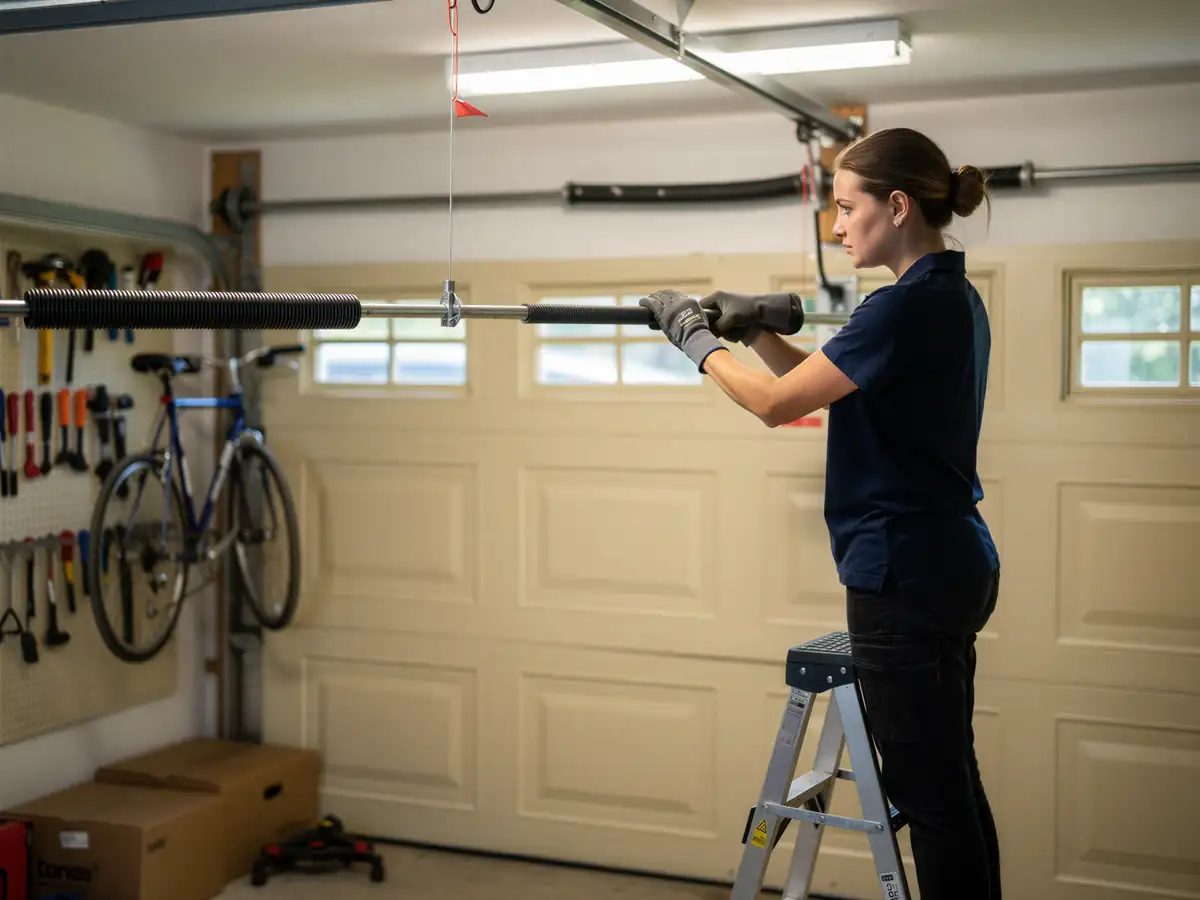
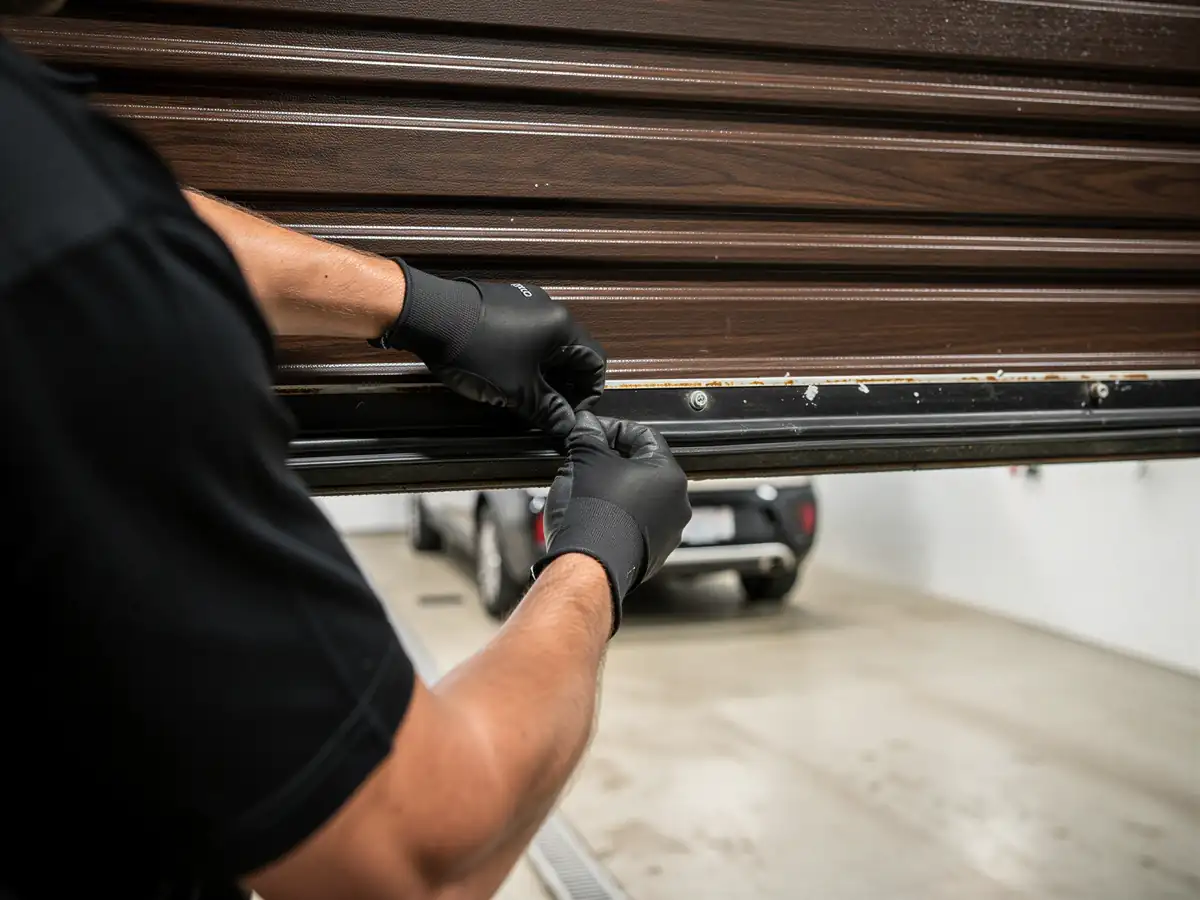
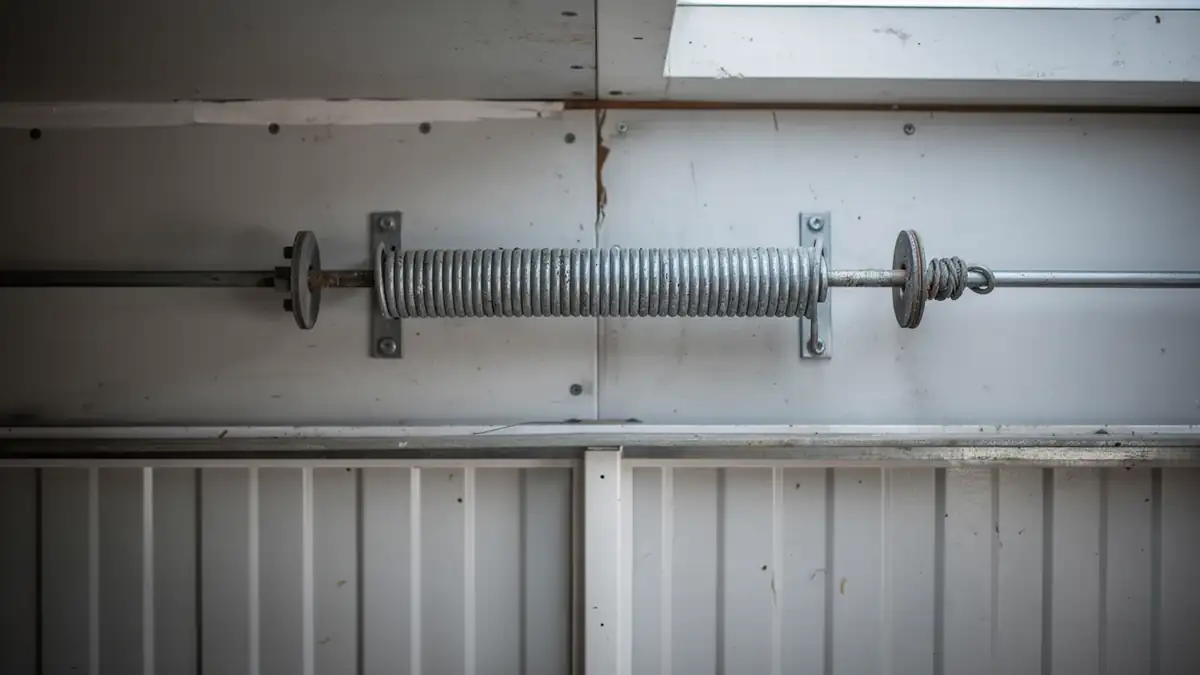
Moderate heat doesn't break a door in one dramatic event. It works on it steadily. Grease on the torsion spring and the track thins out faster in a garage that sits warm most of the year, which means the roller-to-track friction climbs before anyone notices a sound change. Vinyl weatherstripping and bottom seals harden and crack under sustained heat exposure faster than they would in a cooler region, letting in dust and heat that then bakes the opener's circuit board sitting a few feet above.
On a west- or south-facing garage, that heat load is worse in the afternoon, and we see opener photo-eye sensors drift out of alignment as the mounting brackets expand and contract with the daily temperature swing. It's small - a sixteenth of an inch - but it's enough to make a door reverse for no visible reason. None of this means the equipment is poorly made. It means a 20-year-old opener in a Tomball garage has absorbed a different kind of stress than the same opener would have in Minnesota, and the failure pattern looks different because of it.
Where People Go Wrong
The most common mistake is treating a slow-closing or reversing door as an opener problem when it's actually a spring that's lost tension from age and heat-thinned lubricant, or treating a noisy door as a lubrication problem when the rollers are simply past their service life. With housing stock this uniform in age - most of it going up in that same 1980s-90s window across areas like - we see the same failure show up block by block within a year or two of each other, because the hardware is the same age.
The other mistake is assuming a repair extends a door indefinitely. If the opener predates 2000 and the circuit board has already cooked once from heat exposure, replacing it a second time often costs more than a new unit with a sealed board. We won't talk someone into a repair that's just delaying the same call six months out.
With roughly 6,482 owner-occupied houses across the service area and a median household income near $78,938, most of what we see is standard mid-range hardware - not custom doors, not commercial-grade springs. That keeps parts predictable, but it also means a lot of doors are hitting end-of-life at the same time.
Season by Season
Spring and early summer are when heat-dried lubricant and hardened seals start showing up as noise and drag
The door that worked fine in cooler months suddenly feels heavier to lift by hand. Mid-summer is the hardest stretch on opener electronics and photo-eye alignment, since garage interior temperatures climb well past outdoor air temperature by mid-afternoon on a closed-up garage.
Fall tends to be the calmest season for calls
Mostly routine lubrication and roller swaps on doors that made it through summer rough. Winters here stay mild enough, given the moderate-heat climate band, that we don't see the sudden cold-snap spring failures that show up in colder states - the wear here is cumulative heat fatigue, not a single cold morning snapping a bar. That's worth knowing before you assume a January breakdown means the same thing it would somewhere with real winters. One limitation worth naming: if your opener board is original to a house built in the 1980s, we may not carry an exact replacement on the truck - those boards often have to be special-ordered, which can mean a short wait.