What You Pay
We don't post a flat number for this one because what you pay depends on what the track did to the rest of the door on its way off the rails
A door that jumped track but didn't bend anything is a different job from one where a roller punched through the track or a cable came off the drum at the same time. Houses in this service area were mostly built between 1971 and 2002, with a big cluster from the 1980s and 90s, so a lot of what we find is original steel track that's thinned, bowed, or misaligned after decades of use - not something that gets fixed by just sliding the door back on.
If the track itself is bent, bending it back rarely holds
It tends to walk off again within weeks. That's the honest limitation here: we'll tell you straight if the track needs replacing instead of reseating, because a patched bent track is a callback waiting to happen. Get us the symptom clearly - did it bind, did something snap, is the door crooked - and we can give you a real number before a truck rolls, not after.
The Symptom
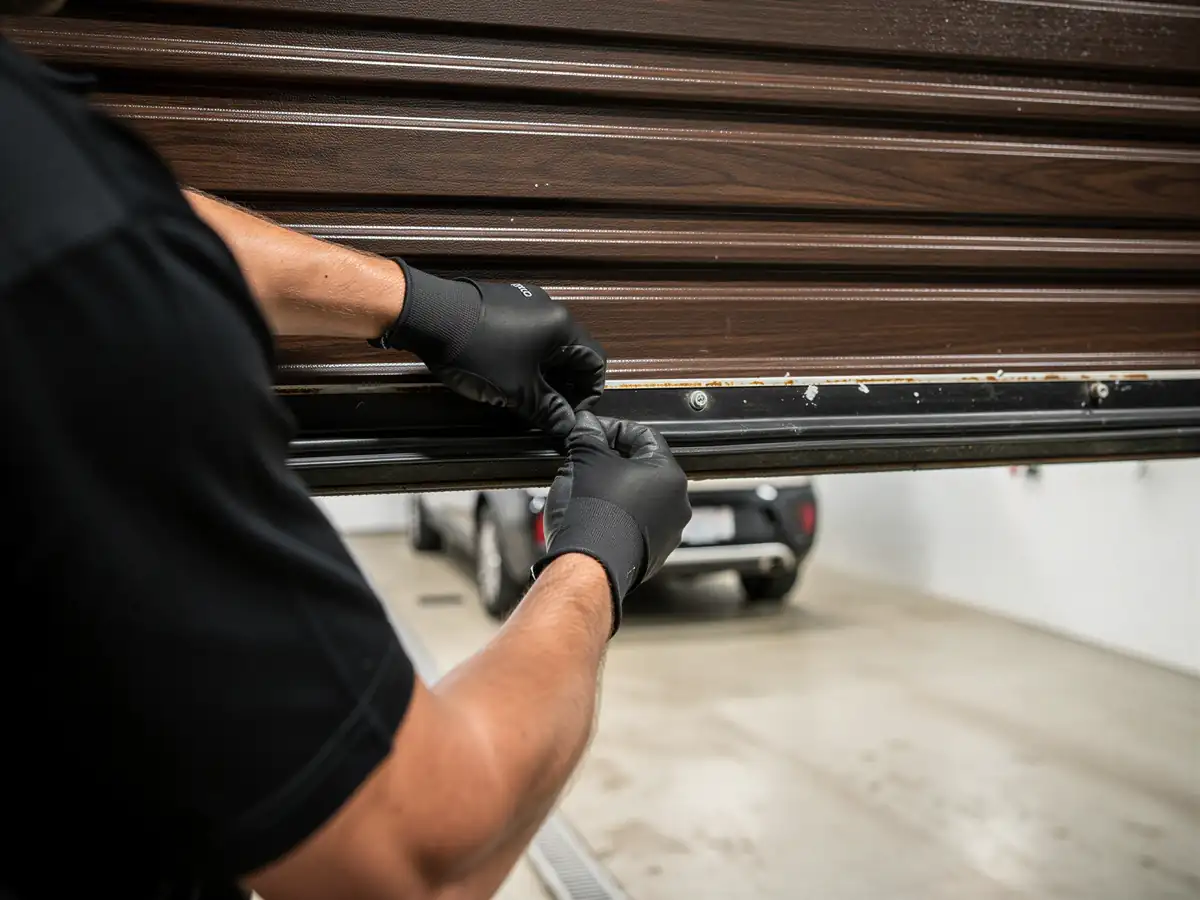
An off-track door usually announces itself one of two ways. Either the door stops partway and sits crooked, with one bottom corner lower than the other, or it comes free entirely and the panel leans out of the frame at the bottom while the top stays roughly seated. Sometimes you'll hear it first - a grinding or popping noise right before it jumps - and sometimes it's silent until the door simply won't move.
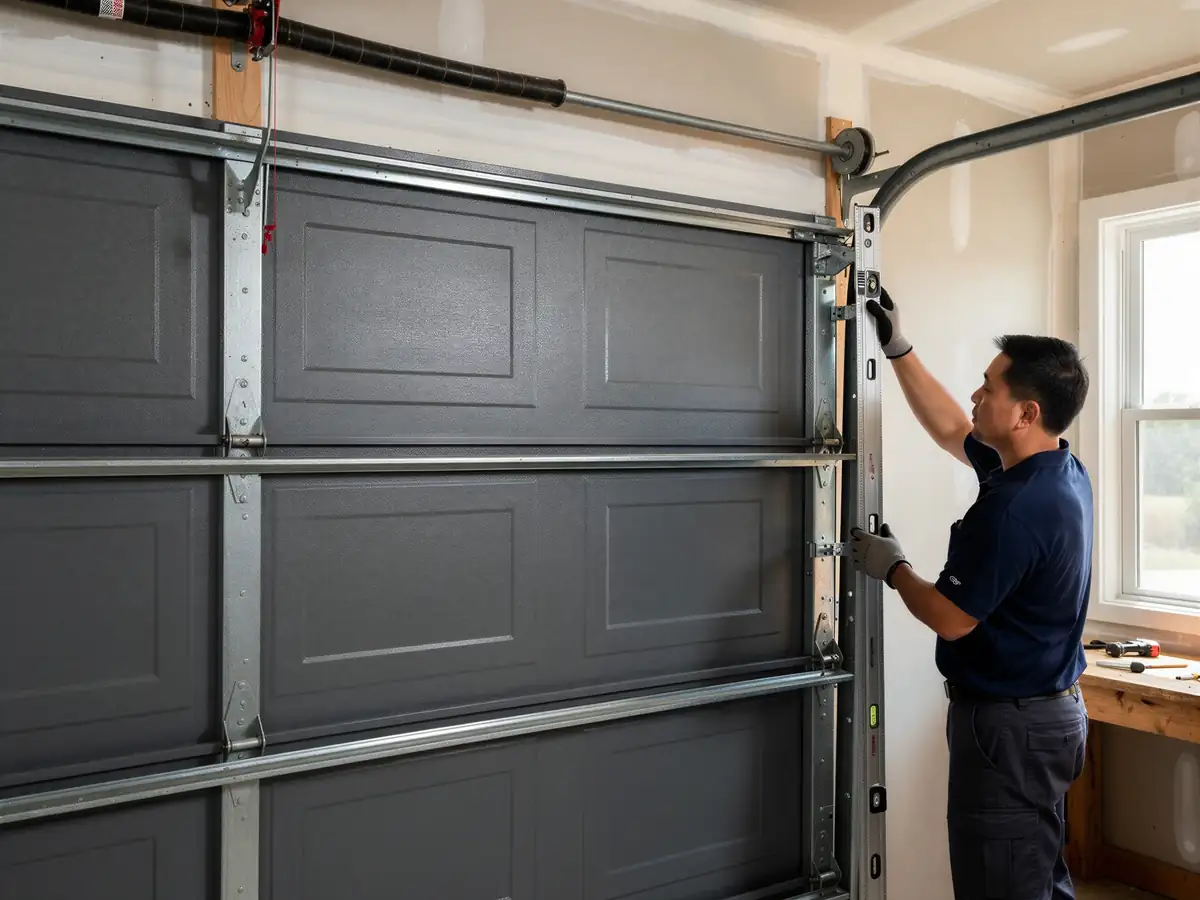
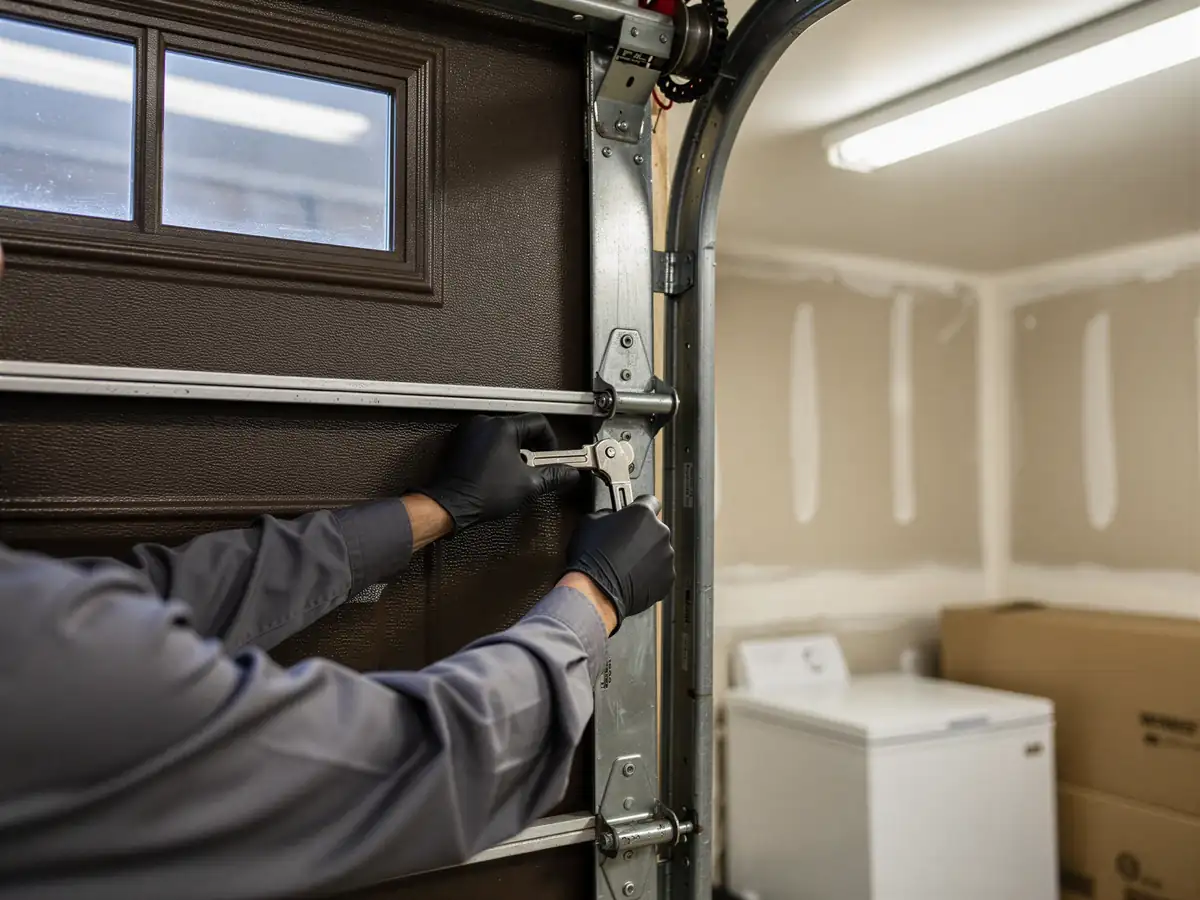
What's almost always underneath it is a roller that's worn its way out of round, a bent track section, or a hinge that's loosened enough to let the panel twist sideways as it travels. In the older housing stock common across this area - doors and track original to builds from the 80s and 90s - galvanized rollers and light-gauge track have had a long time to work loose from their brackets. A door that's merely noisy is not the same emergency as one hanging off its rail; the noisy one can usually wait a day, the hanging one can't.
The DIY Question
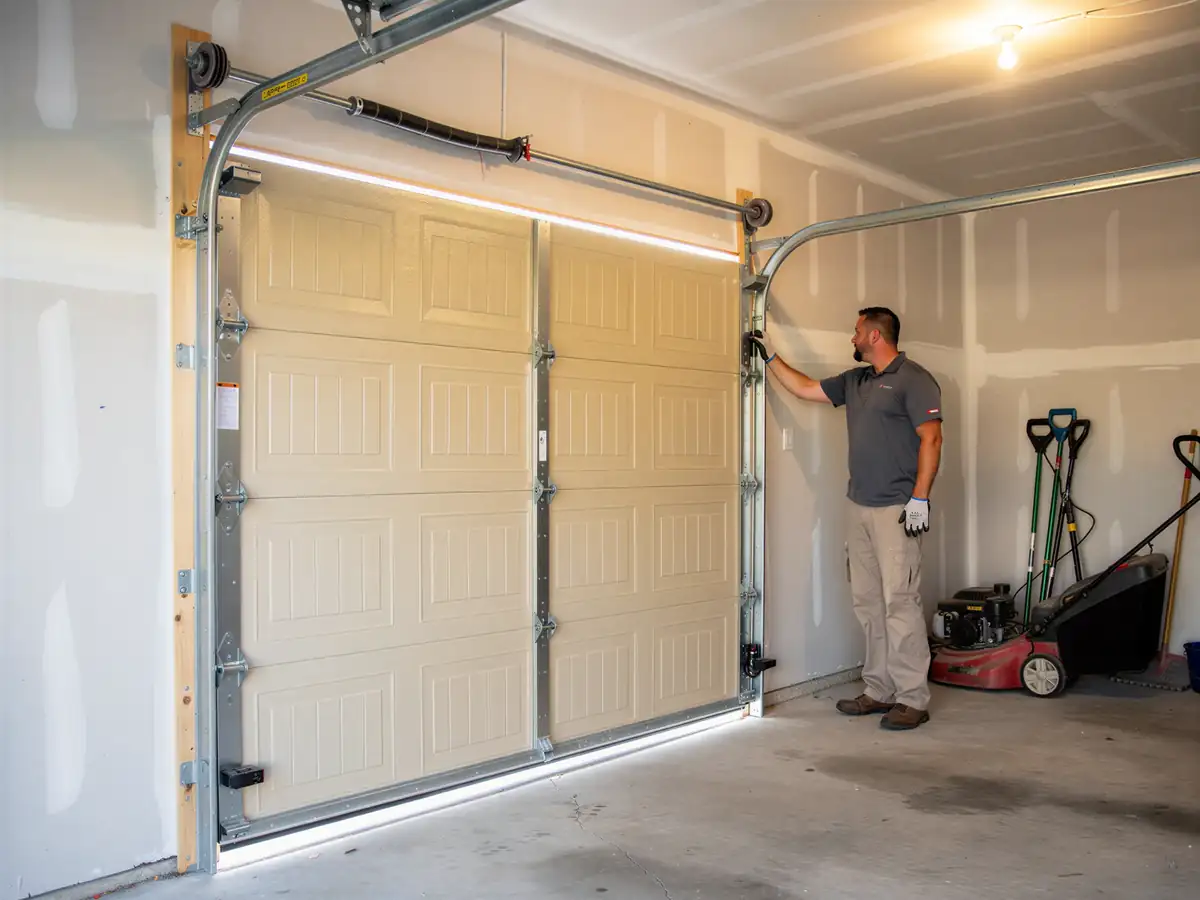
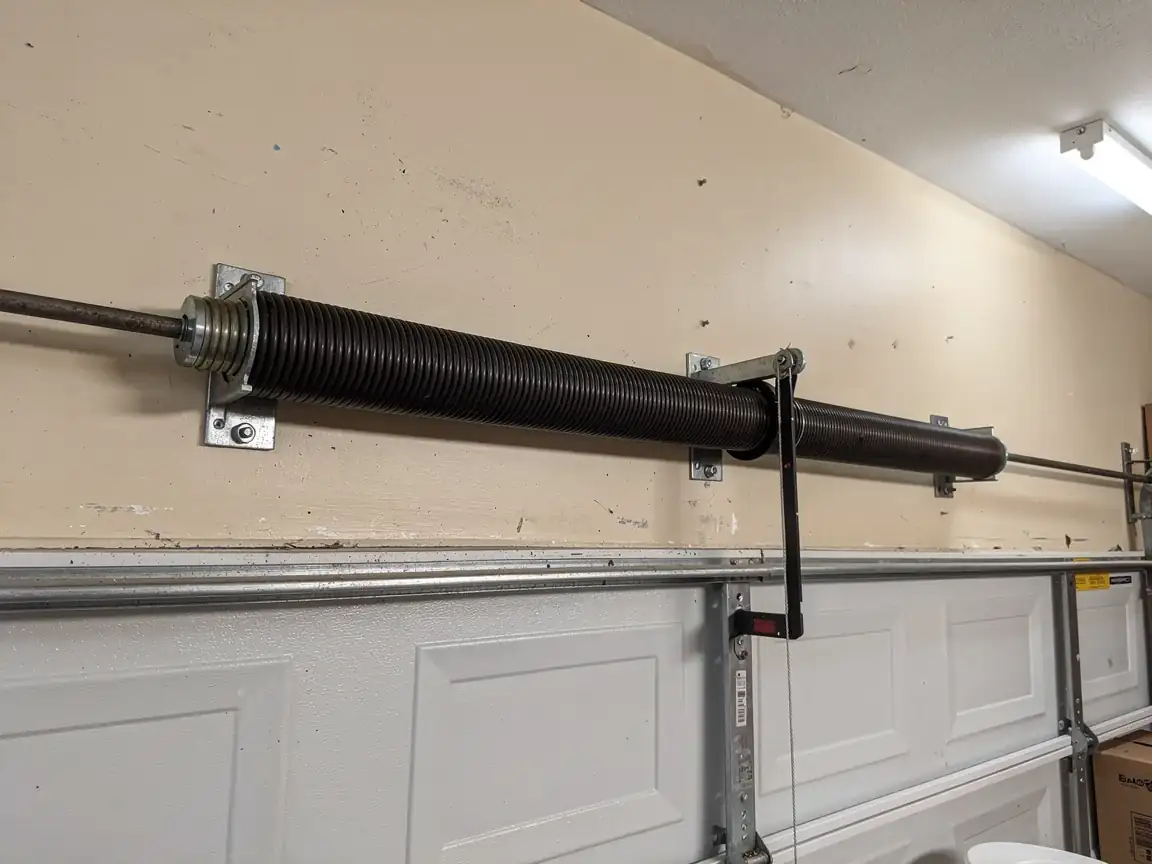
You can push a lightly off-track door back onto its rail yourself if it's a single panel, the spring is intact, and nothing is bent - that much is fair to try. What you should not do is force a door that's jammed at an angle, because the spring is still under full tension and a torsion spring on a double door holds real force. If the door won't move freely by hand with the opener disconnected, stop there.
The other reason to be careful: track alignment on these older setups is rarely a single fix. If one roller walked off, the others on that side have usually worn down the same amount, just not far enough to fail yet. Reseating the one that popped and leaving the rest alone buys you a few weeks before the next one goes. We'd rather you know that going in than have you call us back for the same symptom on the other side of the door.
Why This Fails Locally
This fault shows up more here than it would in a newer market, and it's not random
Housing across this area runs 1971 to 2002, with the bulk from the 1980s and 90s, which means a lot of original track, rollers, and hinge hardware that's simply reached the end of its service life at the same time across whole subdivisions. Builders in that era used similar track gauge and roller stock, so when one house on a street starts popping track, the neighbors with the same build year aren't far behind.
Climate plays a smaller but real part
This area sits in a moderate-heat band, and daily expansion and contraction of steel track and door panels adds up over thirty-plus years - it loosens bracket bolts and lets track drift out of plumb a little at a time, long before anyone notices. None of that is dramatic on its own. It's just steady wear on hardware nobody's touched since it was installed, which is exactly the hardware most of this area still has.