Garage Door Repair for Tomball Homes Built 1971-2002
Garage door won't open or closes slow? Tomball Garage Door Pros explains the common spring and opener failure tied to this area's 1970s-2000s home stock.
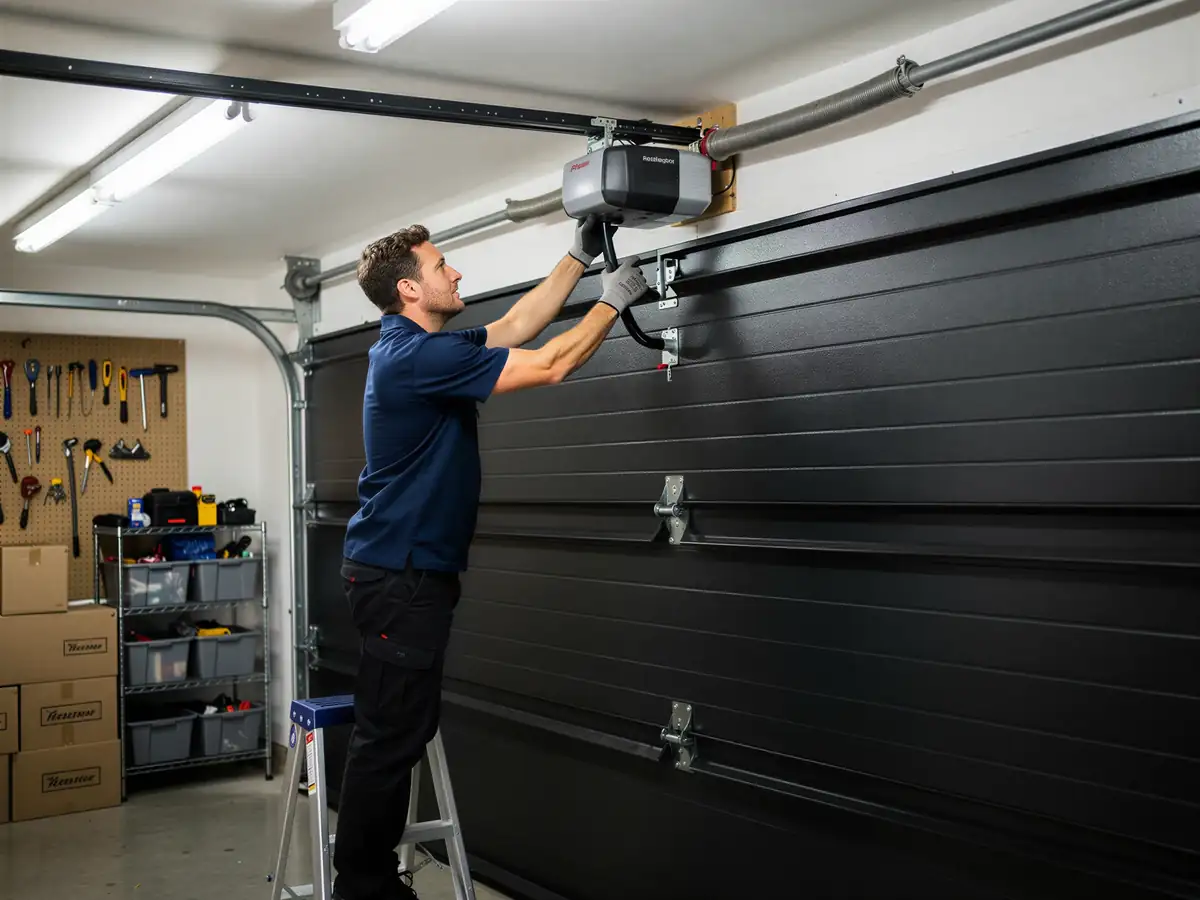
We don't post a flat number here because the fix depends on what's actually broken - a worn roller is a different job than a snapped torsion spring on a double-wide door. What we can tell you is what drives the cost: spring size and count, whether the opener is original to the house or already swapped once, and whether the track has bent from age or a bad close. Most of the homes we work on in this area were built somewhere between 1971 and 2002, median around 1988, which means a lot of original hardware is still in the garage - springs, drums, and openers that have never been touched. That hardware is near or past its rated cycle count by now, so when we quote a job we're usually quoting a full spring replacement, not a patch. If your opener logic board is also failing, that's a separate part and a separate number. We'll tell you both before we touch anything, and we'll tell you if a repair isn't worth doing versus a straight swap.
The Symptom
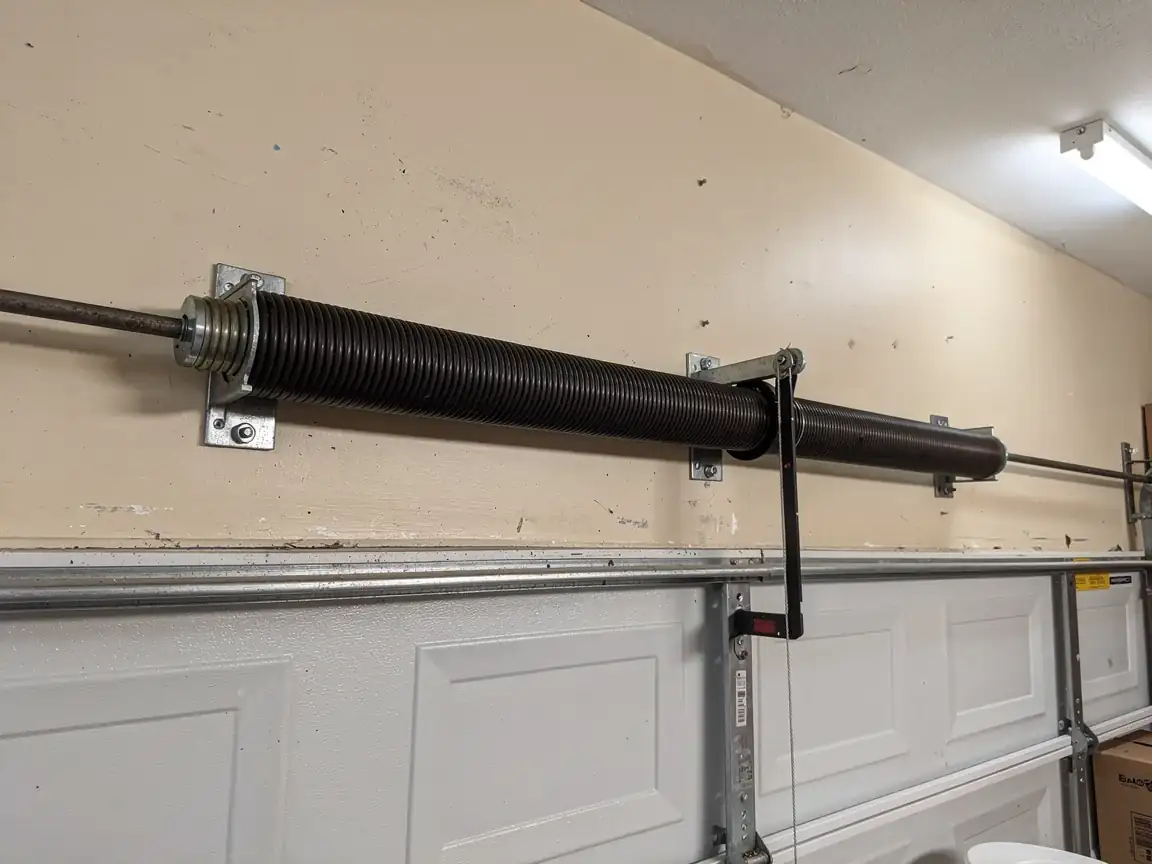
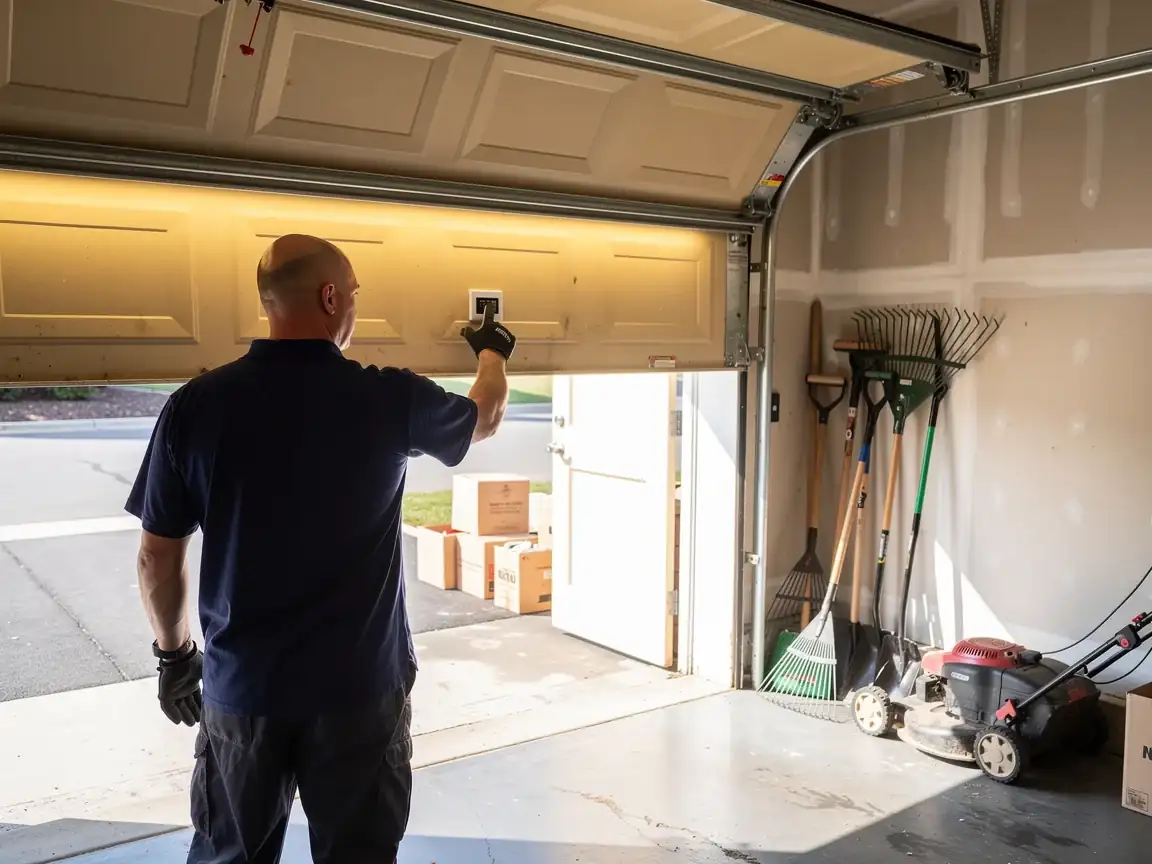
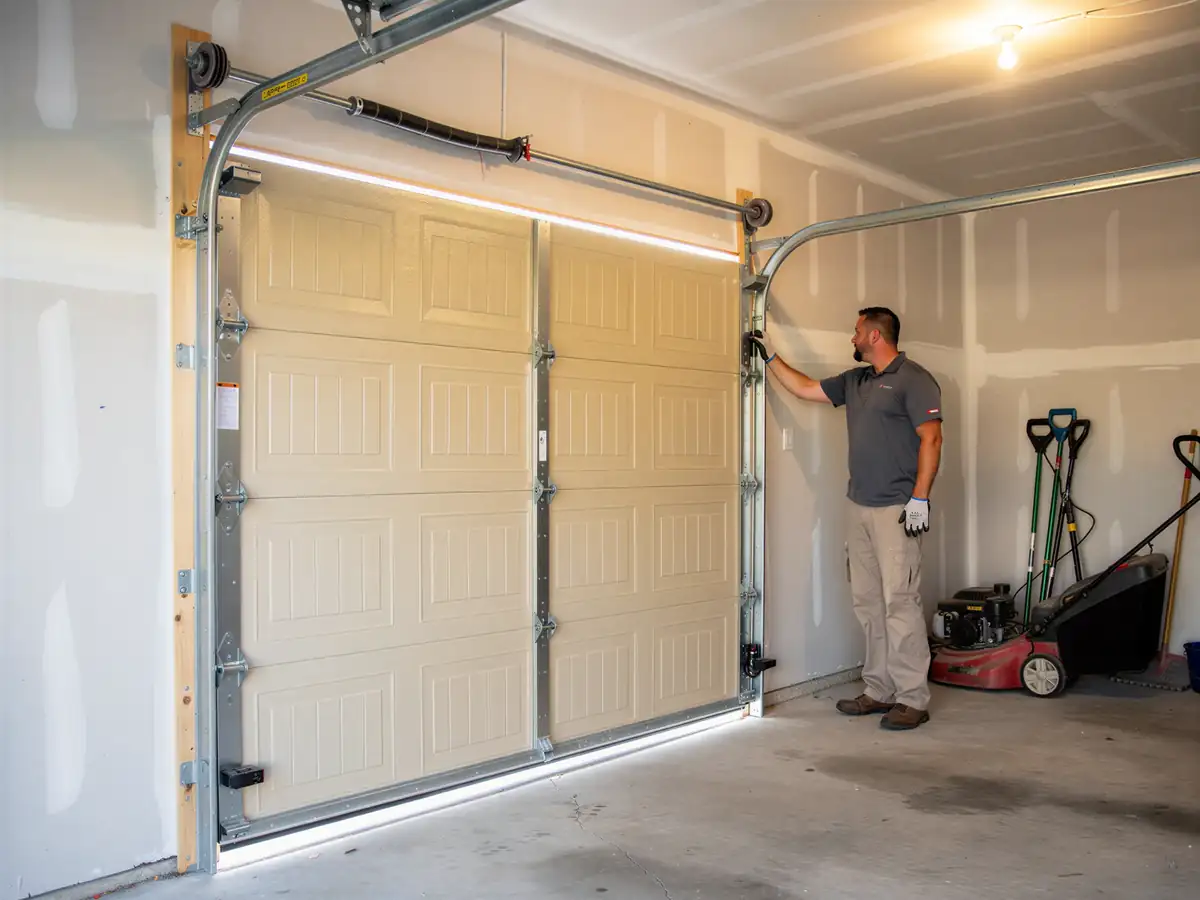
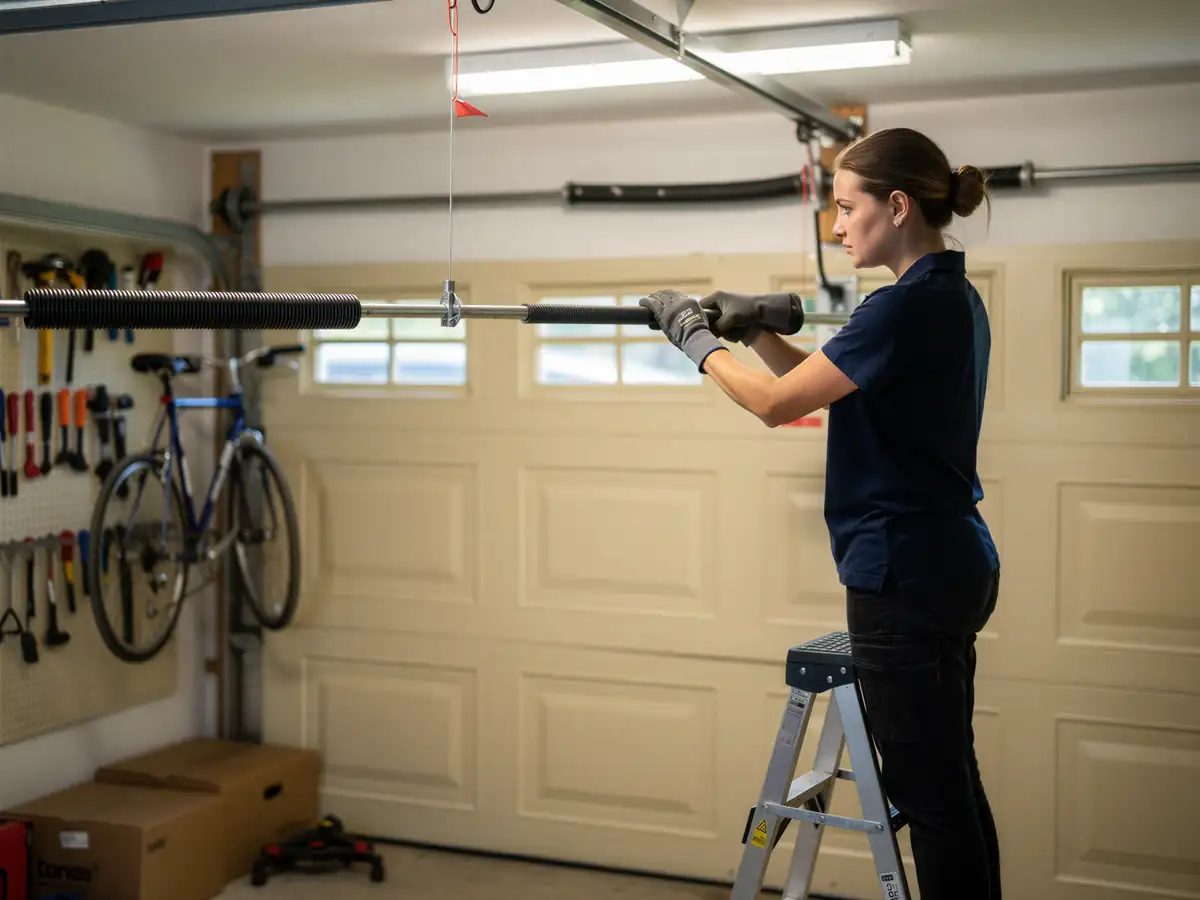
The call we get most from this part of Tomball starts the same way: the door is heavy to lift by hand, or the opener strains and groans before it moves at all. Sometimes it stops halfway and reverses. Sometimes there's a loud bang from the garage first - that's the torsion spring letting go. On a door that's 20 to 30 years old, which matches the 1971-2002 build window common across this area, that spring has done tens of thousands of cycles it was never going to last forever doing. The second version of this symptom is slower: the door closes crooked, one side dropping faster than the other, which usually means one spring is still intact and the other isn't, putting all the load on a cable and roller set that wasn't built to carry it alone. Either way, the door is telling you the spring system has reached the end of its life, not that the opener motor is underpowered.
The DIY Question
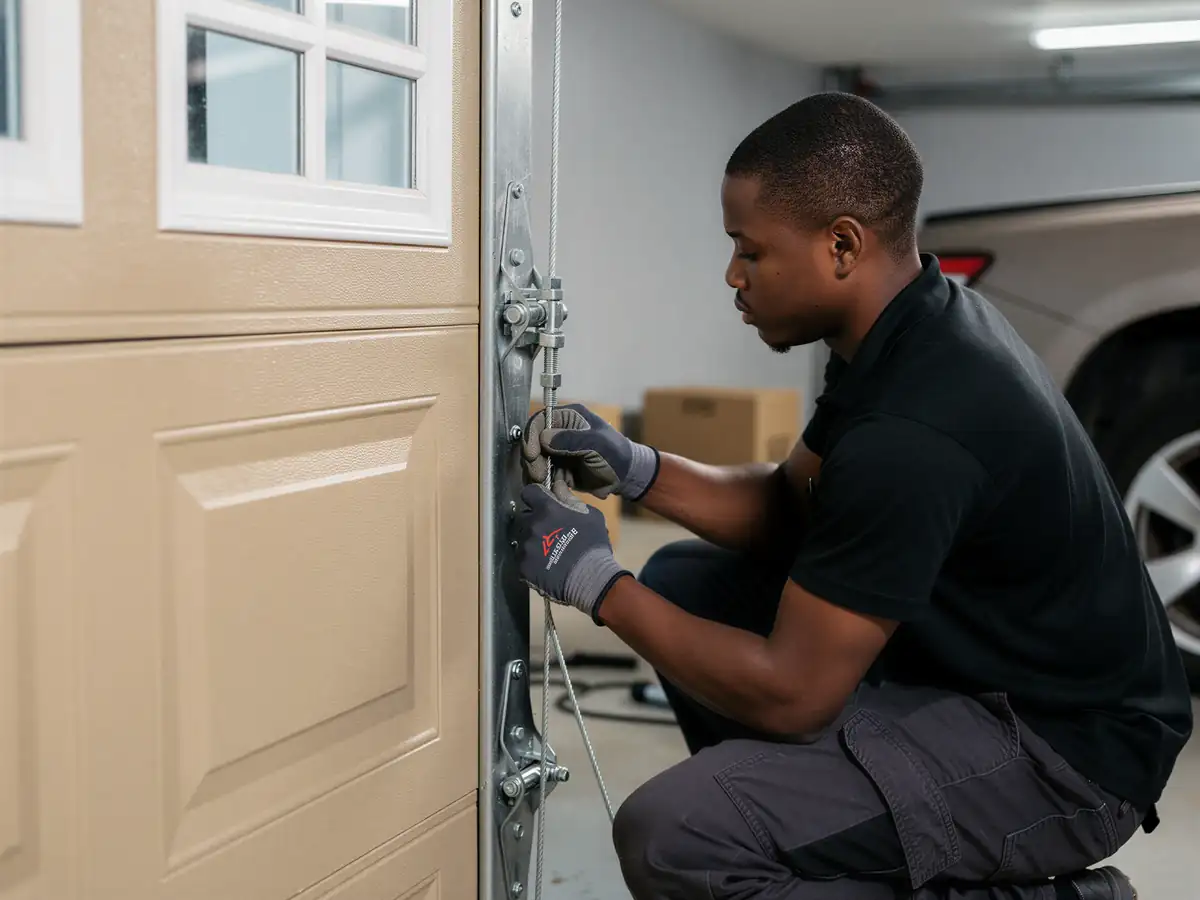
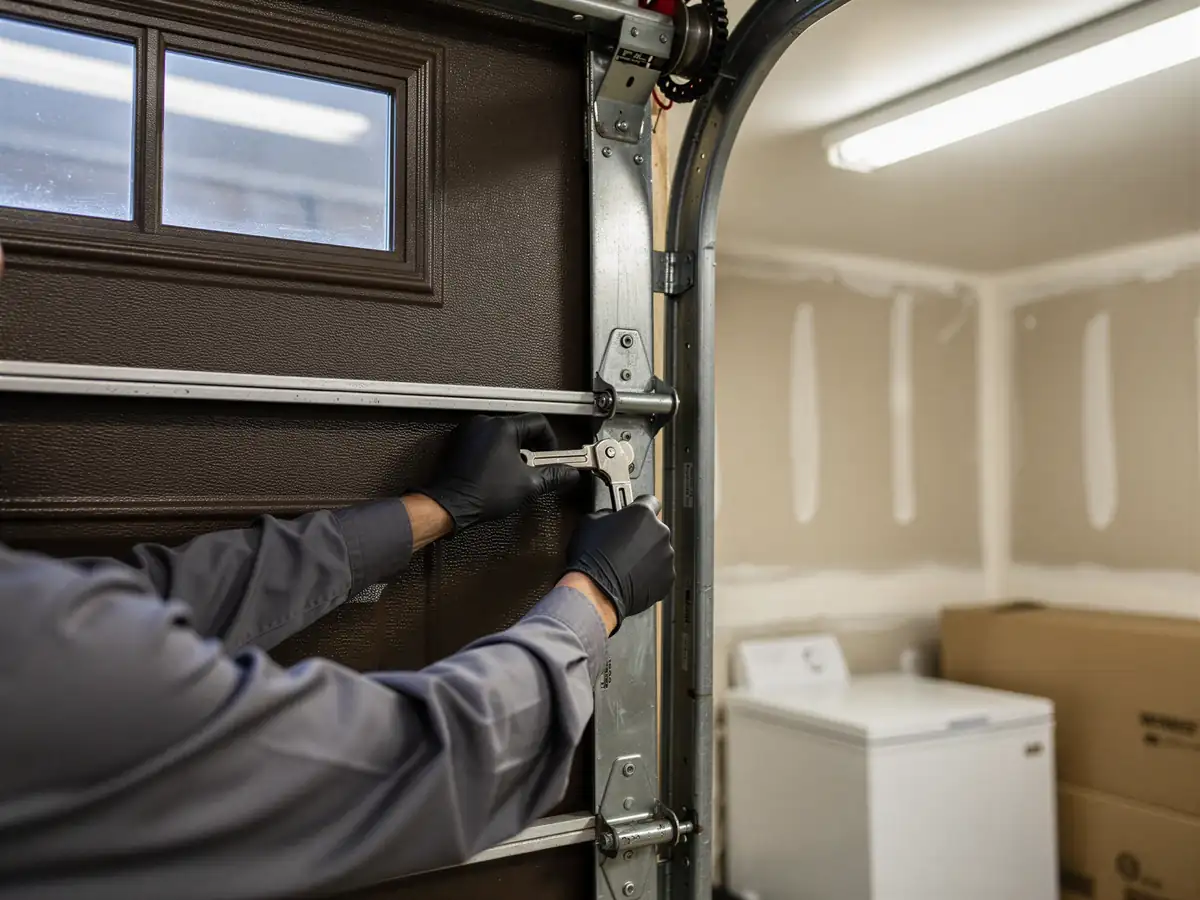
A torsion spring is wound under enough tension to break bones or worse if it lets go while you're working on it - this is not a project to learn on your own garage. Lubricating hinges, tightening a loose bracket, or swapping a remote battery is fine to do yourself. Winding or unwinding a spring, or replacing cables under tension, is not, and it's not a cost-saving move if it puts you in the ER. There's also a quieter reason DIY tends to fail here: most of the openers in homes from this 1971-2002 window are old enough that replacement parts for the exact model aren't sold at a hardware store, so a well-intentioned repair often turns into a mismatched part that fails again in a few months. If you want to do something yourself, check that the door is actually balanced - disconnect the opener and see if it stays roughly level when lifted halfway. If it drops, that's your spring, and that's a call, not a project.
Why This Fails Locally
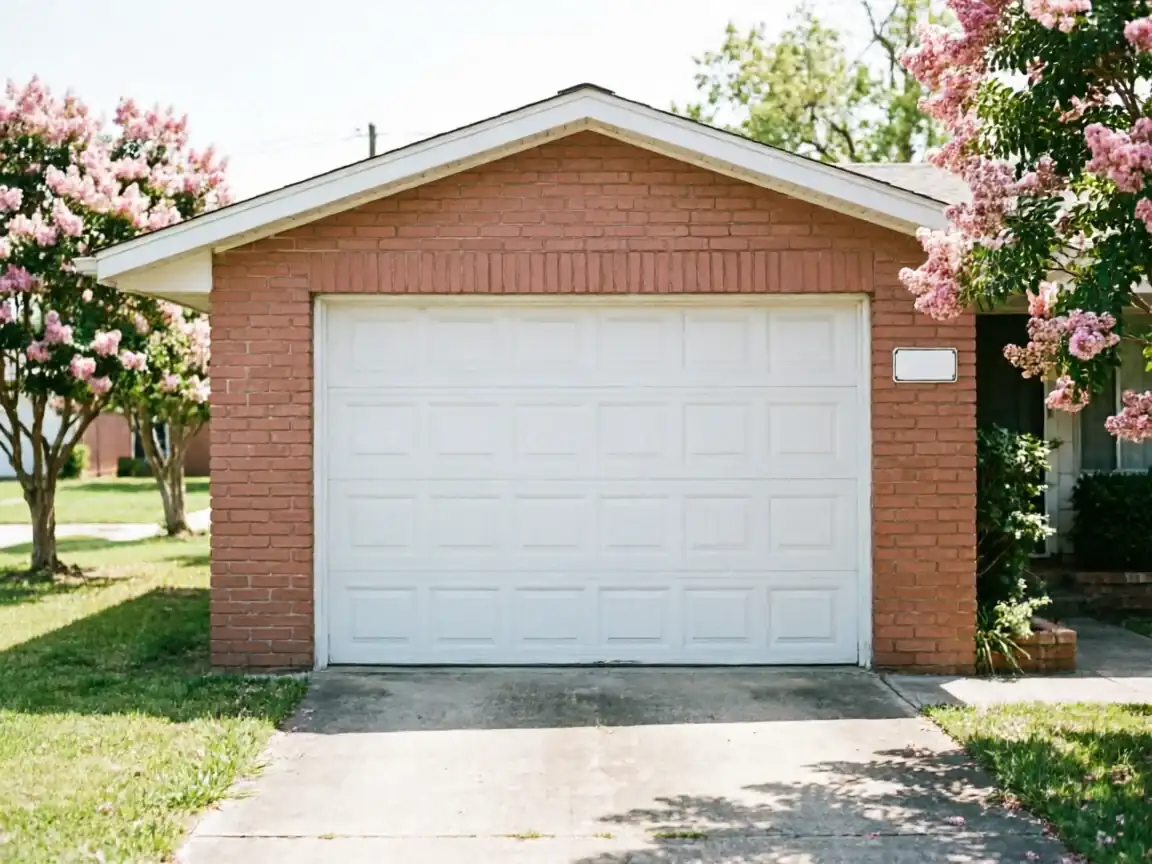
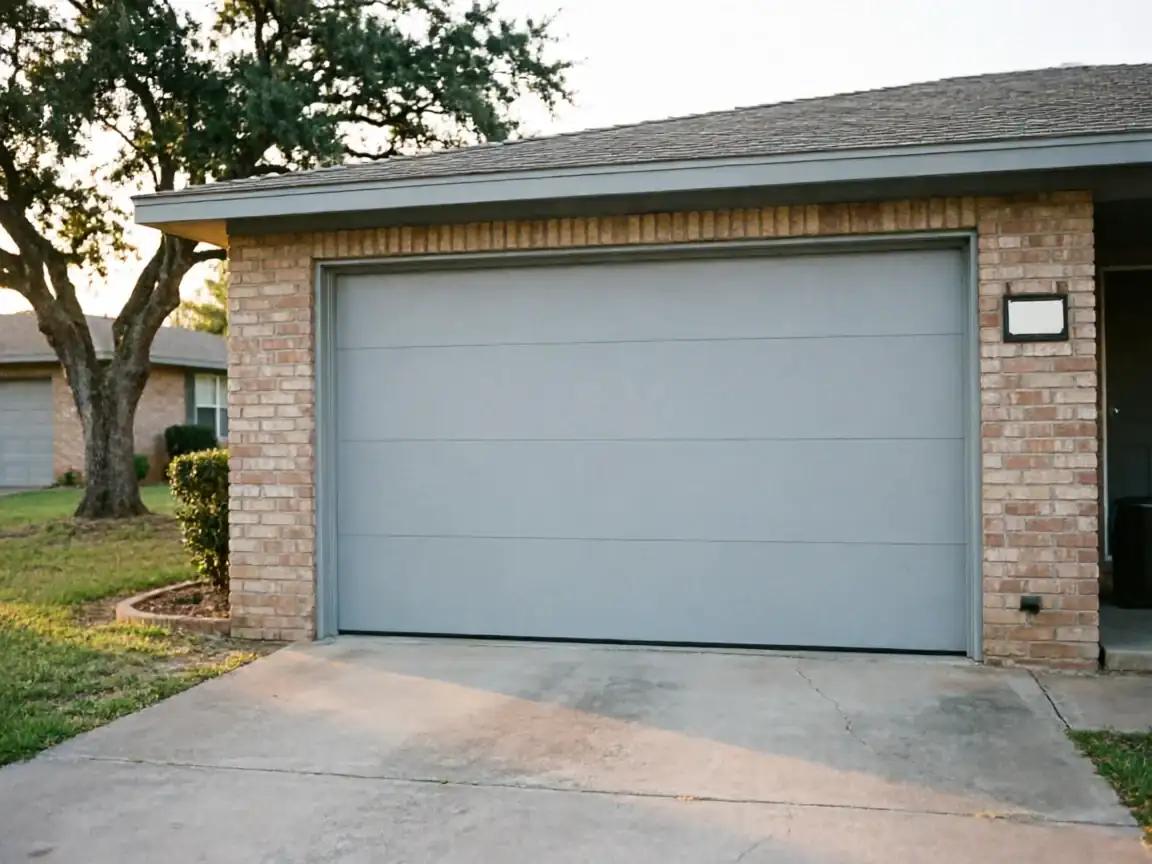
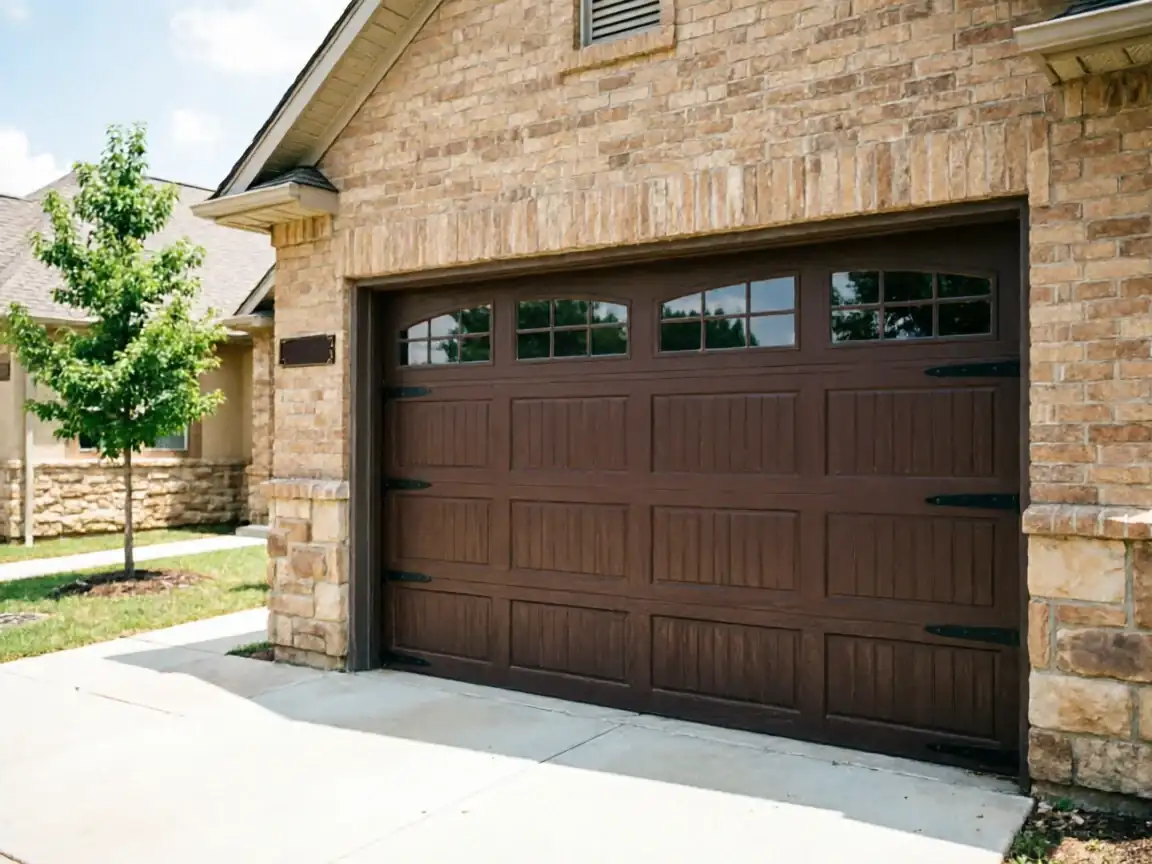
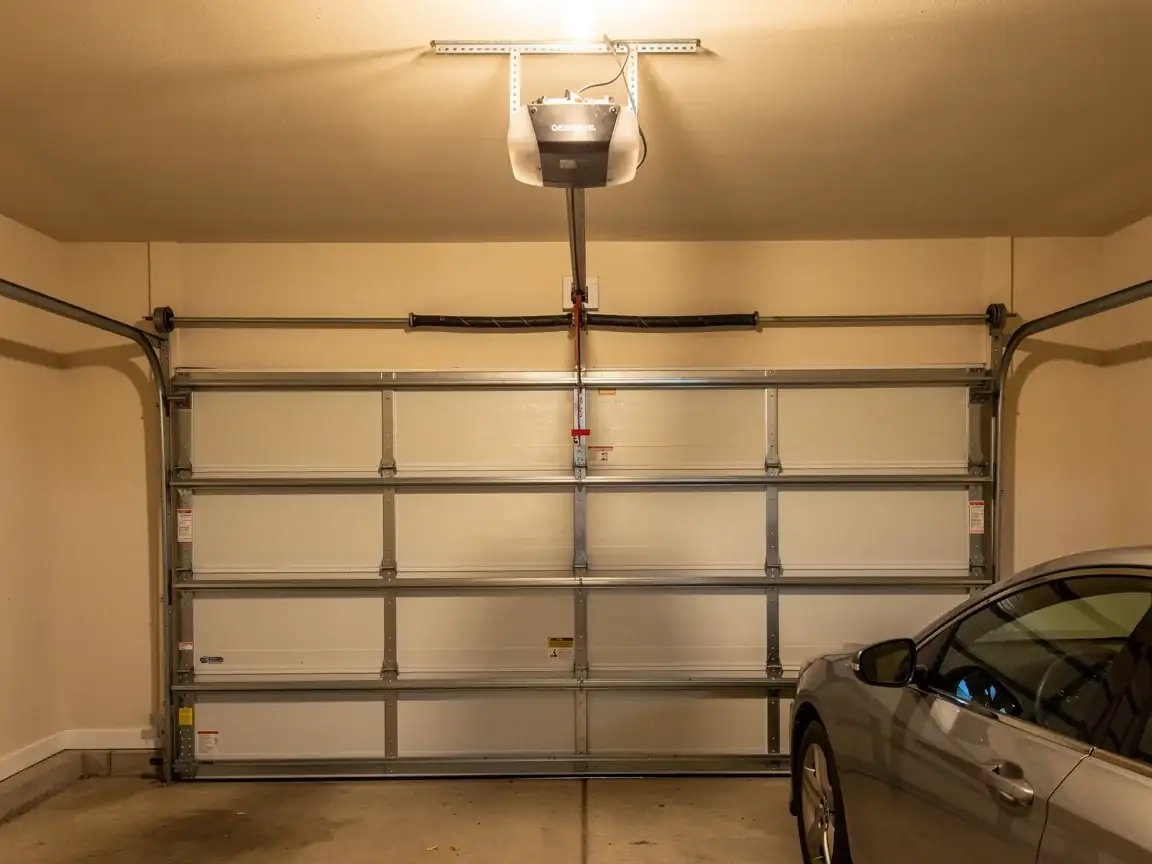
This area's housing stock, mostly 1980s and 90s construction across the named neighborhoods nearby, means a large share of garage doors and openers are original or close to it - they were never built to run forever, and nobody's replaced them yet. Pair that with a moderate heat climate band: garages here sit through long stretches of high temperature that dry out lubricant, expand metal fittings, and put extra strain on a spring that's already near the end of its rated cycles. It's not one dramatic event that breaks these doors, it's years of heat cycling on hardware installed when the house was built. We see this consistently on original equipment on houses built in that 1971-2002 window, less often on homes that already had a spring or opener swap in the last decade. If your house falls in that build range and nobody's touched the spring system yet, the failure you're hearing isn't random - it's about due.
How it works
From “it’s stuck” to “it’s fixed”
01
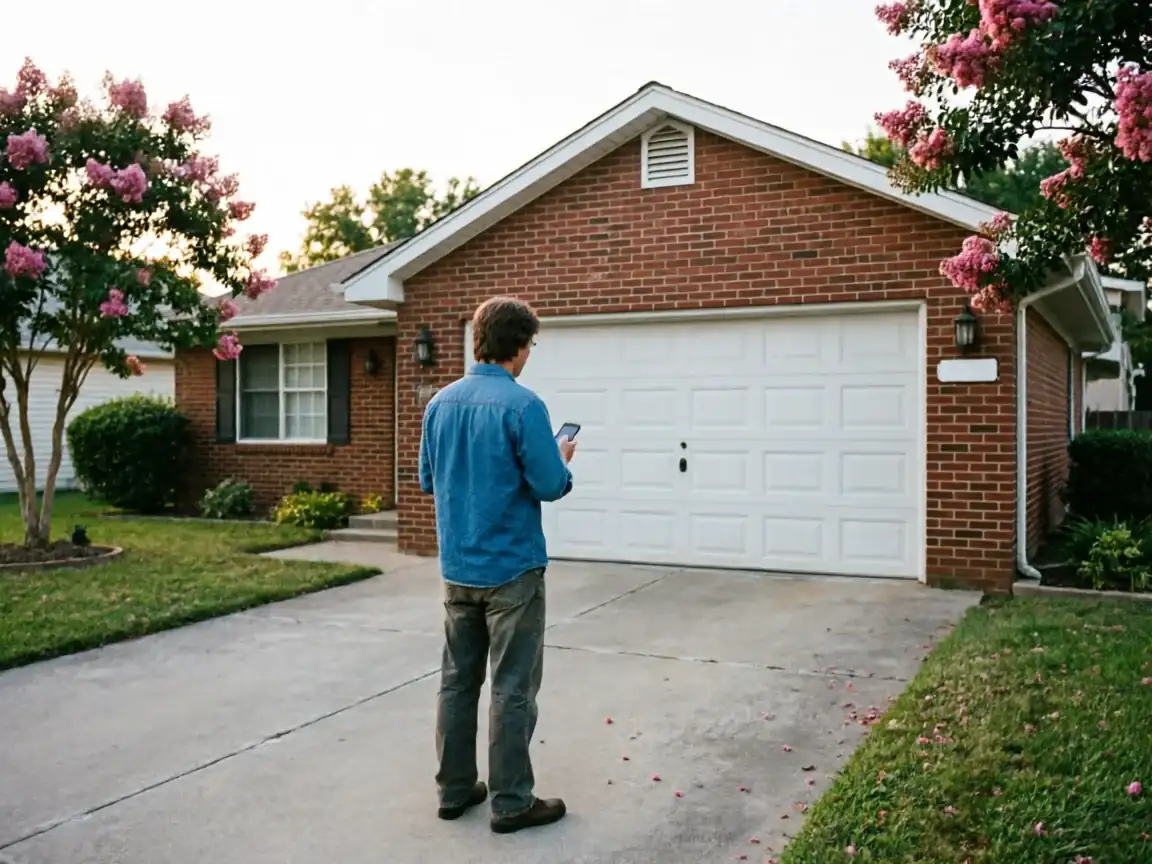
Tell us what’s wrong
Describe the symptom - won’t open, loud bang, opener runs but the door won’t move.
02
On-site diagnosis
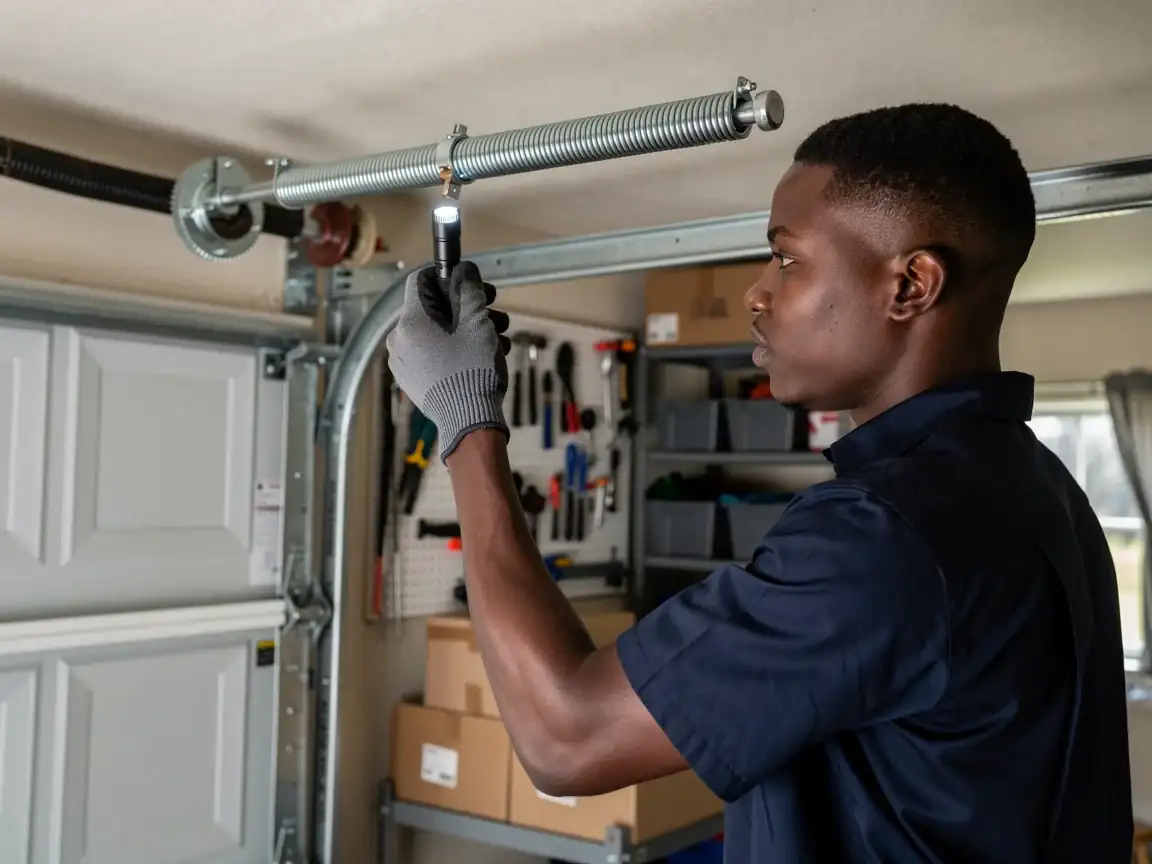
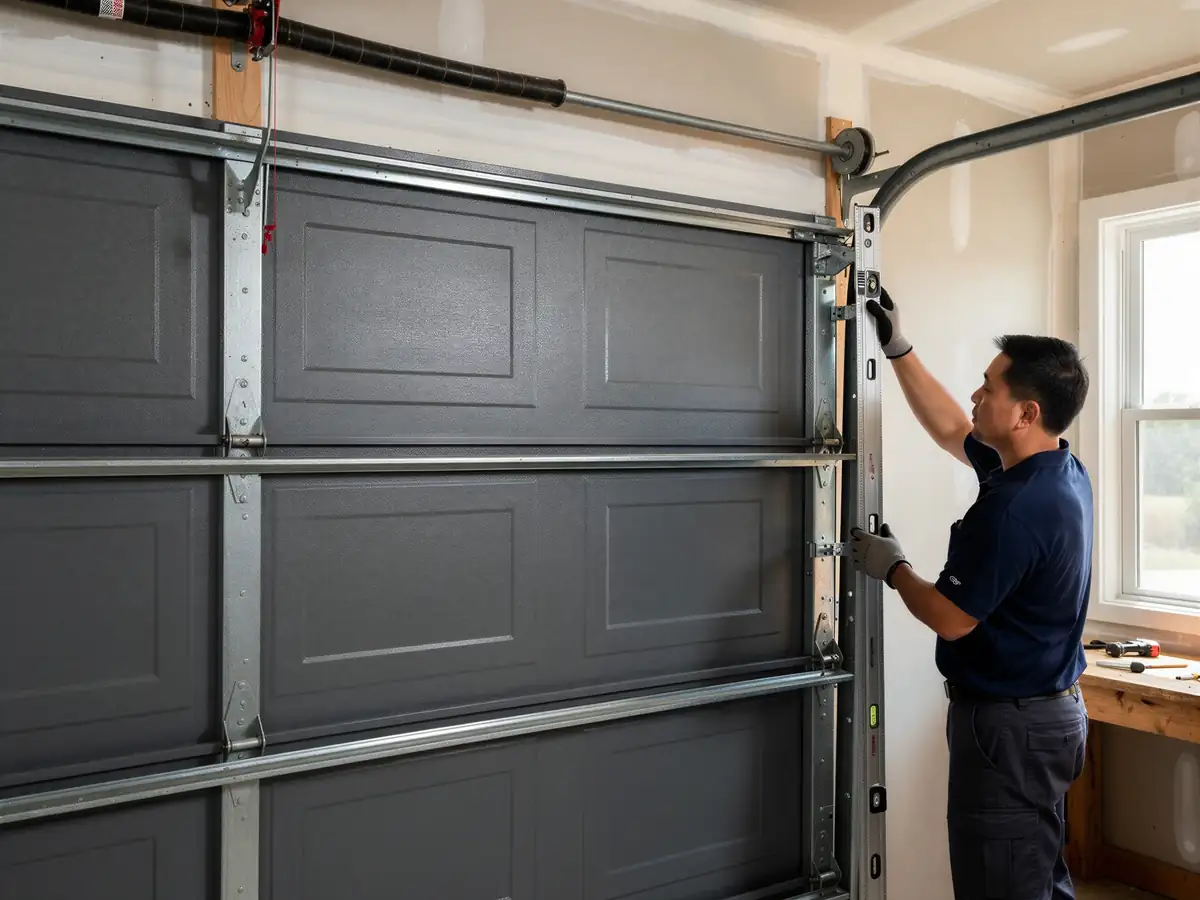
A technician tests the door under power and by hand and finds what actually failed.
03
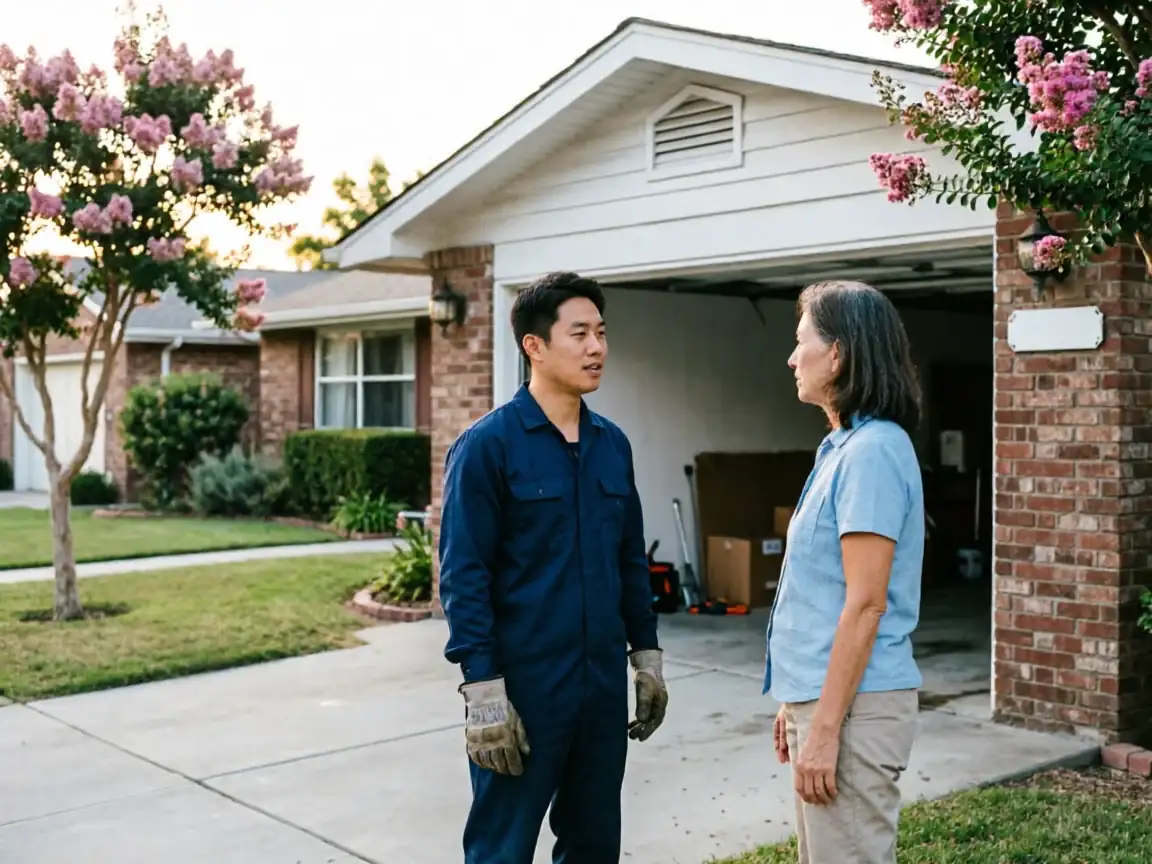
Clear, up-front plan
You get the fix that’s needed and what drives the cost - before any work starts.
04
Repaired & tested
The repair is done, the door is set true and tested, and the work area left clean.
Not sure which repair your door needs in Tomball, TX? Describe what it’s doing - every job starts with a diagnosis.
How old does my garage door have to be before the spring is a concern?
If your house was built in the 1971-2002 range common to this area and the spring system hasn't been replaced, it's past or near the end of its rated life regardless of how it looks. Age and cycle count matter more than appearance - a spring can look fine right up until it breaks.
Can I just replace one spring instead of both?
On a two-spring door, we usually recommend replacing both at the same time, since the second one is close behind the first in wear and a mismatched pair puts uneven load on the door. We'll tell you if yours is a true single-spring setup where that doesn't apply.
Is it ever better to replace the whole door instead of repairing it?
Sometimes - if the opener, springs, and track are all original and all near failure, patching each one separately can cost more over a year than one replacement. We'll walk through that math with you rather than just quoting the repair in front of us.
Ready to get your garage door sorted?
Tell us what it’s doing and where you are in Tomball - we’ll take it from there.